- ZOOTECH - AI, Tech & Data Trends
- Posts
- AI may be able to recreate a person's voice.
AI may be able to recreate a person's voice.
AI offers the capability to reconstruct an individual's unique vocal characteristics.

ZOOTECH - AI, Tech & Data Trends
December 30, 2024 • Estimated Reading Time: 8 minutes
🗣️ Restoring the Power to Speak: How AI is Changing Lives
Imagine losing your voice—the unique tone, rhythm, and inflections that make you unmistakably you. For countless individuals, this is a reality. But thanks to advancements in AI, the ability to reclaim one’s voice is no longer just science fiction; it’s a profound leap in human connection.
AI-powered voice reclamation technology uses personal voice samples, neural networks, and sophisticated algorithms to recreate and restore a person’s voice. And for many, this innovation is more than a tool—it’s a lifeline.
Real Lives, Real Voices
Sarah’s JourneyAt 34, Sarah was diagnosed with ALS. As her ability to speak deteriorated, she turned to AI voice technology. Today, she communicates using her own voice, giving her the freedom to express herself authentically—an experience she calls "getting her identity back."
A Veteran’s StoryAfter losing his voice to throat cancer, Michael, a retired military officer, felt disconnected from his loved ones. With AI voice restoration, he once again reads bedtime stories to his grandchildren, preserving the intimacy of those moments.
Global ReachFrom a teacher in Chicago to a farmer in New Delhi, AI voice technology is touching lives worldwide, breaking down barriers of language and access, and making self-expression a universal right.

AI Voice Technology Impact
Looking Ahead: A World Where Every Voice Is Heard
The future of AI voice technology is full of promise.
As algorithms become even more refined, we may see real-time voice synthesis—allowing individuals to speak dynamically during live interactions. Imagine a video call where a person with vocal limitations can seamlessly participate with their natural voice.
Moreover, integration into healthcare systems could make this technology a standard offering for those facing medical voice loss. Paired with accessibility tools, AI voice could soon be available to anyone, anywhere, regardless of socioeconomic status.
Finally, the potential for cross-industry innovations cannot be ignored. From aiding in language learning to recreating historical voices for education, AI-powered voice synthesis could expand in ways we can only imagine today.
This is more than a technological breakthrough. It’s a testament to humanity’s commitment to preserving individuality, dignity, and connection—one voice at a time.
🛠️ Unveiling the Tech: How AI Restores Your Voice
Voice restoration through AI isn’t magic—though it might feel like it. It’s a fusion of cutting-edge technology and intricate algorithms that bring a deeply personal aspect of communication back to life. At its core are two technological powerhouses: machine learning and neural networks.
Machine learning allows AI to analyze vast amounts of voice data, identifying patterns, nuances, and unique inflections. Meanwhile, neural networks—designed to mimic the human brain—take these patterns and craft lifelike recreations of an individual’s voice. Together, they create a tailored digital voice that feels authentic.

AI neural network concept
The Process: From Silence to Speech
Data CollectionIt starts with gathering voice samples—anything from old recordings to brief phrases spoken by the individual. The more data, the better the results.
Voice ModelingAI analyzes these samples, mapping vocal features like pitch, tone, and rhythm. This step is where neural networks come in, replicating the subtle textures that make a voice unique.
Voice SynthesisFinally, the AI generates new speech, allowing individuals to "speak" words they never recorded. Whether it's a simple greeting or a lengthy conversation, the synthesized voice responds naturally.
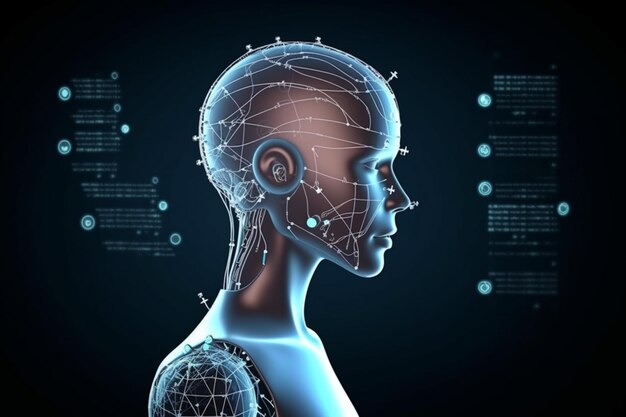
AI synthesizing voice
What the Experts Say
“AI voice restoration isn’t just about technology—it’s about empowerment,” says Dr. Maria Lin, a speech synthesis researcher. “Restoring someone’s voice means restoring a piece of their identity. The emotional impact is immeasurable.”
Similarly, Jake Turner, an AI developer, highlights the precision involved: “It’s not just voice cloning. We’re talking about crafting digital voices that feel real—like someone’s essence is speaking again.”
This balance of art and science continues to push innovation in AI voice synthesis, transforming lives in tangible, meaningful ways.
🌍 Global Impact: AI Voice Restoration Changing Lives
Imagine losing the ability to express yourself—to share a joke, say "I love you," or even call out for help. For millions worldwide, this is reality. But AI voice restoration is rewriting that story.
Real Lives, Real Voices
In Tokyo, a stroke survivor named Kenji speaks to his grandchildren again. His once-muted voice has been brought back, inching closer to its original tone, thanks to AI. Across the globe in Toronto, Sarah, who lost her voice to ALS, now addresses advocacy events using her own reconstructed voice—her true voice. These are more than stories. They’re transformations.

man speaking with AI assistance
A Game Changer for Healthcare
Hospitals and clinics are already weaving AI voice technology into therapeutic programs. Speech therapists are using AI tools to help patients relearn communication faster, even blending it with traditional therapies to reclaim vocal identities.
For patients with degenerative diseases, this technology isn’t just about speaking—it’s about improving mental health and maintaining dignity. By giving them back their voices, AI is restoring independence and confidence in small yet powerful ways.
Accessibility Must Be the Priority
Here’s the challenge: most of this innovation is prohibitively expensive. But does it have to be?
Organizations are pushing to make voice restoration more accessible. Nonprofits and startups alike are exploring affordable AI solutions for underserved communities, ensuring no one is left behind. Because a voice isn’t just a luxury—it’s a human right.

diverse group using accessible tech
AI voice restoration is making waves globally, but where it truly shines is in its ability to heal, empower, and connect. The question is: how far can we take it?
Recreating human voices with AI is groundbreaking, but it also raises significant ethical questions.
How do we ensure this technology is used responsibly? What happens if a person’s voice is replicated without their consent? These concerns have sparked heated debates, as the line between innovation and exploitation becomes increasingly blurred.
One major issue is privacy. A person’s voice is deeply personal and unique—essentially a part of their identity. Without robust safeguards, voice cloning could be misused for impersonation, fraud, or even deepfake scams. Additionally, there are concerns about ownership: Who truly "owns" a recreated voice—the individual, the AI company, or another entity altogether?

Ethical AI voice technology
The Regulatory Response
Governments and organizations worldwide are beginning to take action.
Some countries are introducing laws that require explicit consent before a person’s voice can be captured or replicated by AI. Others are crafting broader frameworks to regulate AI technologies as a whole, focusing on transparency and accountability in development.
In parallel, tech companies are implementing internal checks, such as embedding audible watermarks or requiring user verification before generating voice samples. These steps aim to prevent misuse while still fostering innovation.
Striking the Right Balance
Balancing the risks and rewards of AI voice technology is no easy feat.
Developers face a dual responsibility: to advance the technology while ensuring it adheres to ethical standards. For example, some are using anonymization techniques, ensuring that sensitive voice data is stripped of identifiable characteristics during processing.
Policymakers, on the other hand, are tasked with creating regulations that don’t stifle progress but protect individuals from potential harm. Collaboration between governments, technologists, and advocacy groups is crucial to finding this middle ground.
The challenge is immense, but the stakes are even higher. How we navigate these ethical considerations could define the future of voice AI for generations to come.
💡 From the Experts: Insights on AI Voice Restoration
What does the future sound like? It's a question we posed to top professionals in AI, speech therapy, and tech innovation. Their answers are as inspiring as they are thought-provoking.
🎙️ Exclusive Interviews: Behind the Breakthroughs
We sat down with Dr. Emily Zhang, a leading AI researcher, who explained how machine learning transforms voice fragments into lifelike speech.
"It's like piecing together a puzzle with infinite possibilities," she said. "The goal isn’t just to replicate sound, but to revive identity.”
Speech therapist Mark Rivera shared his perspective on the intersection of science and empathy. Mark uses AI tools to help patients rebuild their voices after life-changing events.
"For many, it’s not just about speaking—it’s about reclaiming who they are," he told us.

AI researcher explaining voice technology
🌟 Expert Opinions: Challenges & Opportunities
While the progress is undeniable, experts agree there are hurdles to overcome.
Some, like tech innovator Priya Mehta, believe ethical boundaries must be clearly defined as the technology advances. “We must address consent and security in voice replication before it becomes a larger concern,” she noted.
Others emphasize the potential of AI voice restoration to democratize accessibility. Dr. Zhang remarked, “In five years, this will be a standard tool for global healthcare systems.”
📌 Advice for Moving Forward
Whether you're an industry professional or an intrigued observer, here’s how you can engage with this game-changing field:
Stay informed. Follow advancements in AI voice technology through reputable sources and journals.
Advocate for accessibility. Support initiatives that bring this technology to underserved communities.
Join the conversation. Attend conferences or webinars where experts discuss the ethics and applications of AI voice restoration.
AI is giving people their voices back—literally and figuratively. The journey is just beginning, and there’s room for everyone at the table.
🗣️ Voice Reclamation: The Power of AI
Imagine losing your ability to speak—not just for a day, but indefinitely. Now, imagine technology giving it back to you.
This is no longer science fiction. AI-powered voice replication is transforming lives by enabling individuals to regain their unique voices. By analyzing small voice samples or even old recordings, cutting-edge algorithms can recreate a person’s speech patterns, tone, and inflection.
But with this power comes complexity. How do we balance the life-changing benefits with the ethical questions of privacy and misuse?

AI recreating human voice visualization
Real Stories, Real Impact
Take the story of Sarah, a teacher who lost her voice following surgery. Using AI, she now communicates with her students in the voice they always knew her for.
Or consider John, a musician whose ALS diagnosis silenced his singing. Thanks to voice cloning technology, he’s been able to perform once again—this time, with his own voice leading the melody.
These stories aren’t just inspiring. They illustrate the profound emotional and cultural impact of reclaiming something as personal as your voice.

Person using AI-powered voice assistant
Insights from the Experts
Dr. Emily Carter, a leading speech pathologist, sees this as a remarkable breakthrough. “For many, it’s not just about communication—it’s about identity,” she explains.
AI developer Raj Patel agrees but adds a note of caution: “The tech is powerful, yes, but safeguards are critical. We don’t want a world where voices are stolen and misused.”
As innovators push the limits of what’s possible, the conversation around responsibility grows sharper. After all, the goal isn’t just to mimic voices—it’s to give people back a piece of their humanity.
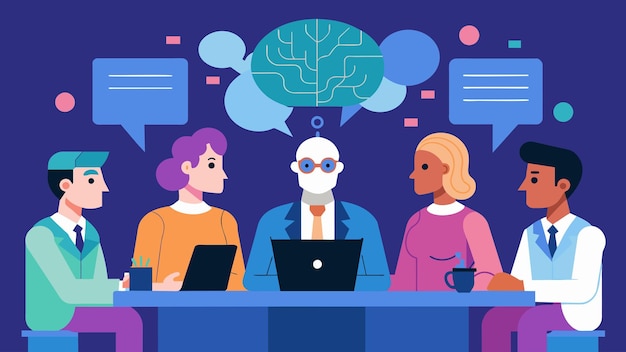
AI ethics discussion panel
🌐 Accessibility Advances: AI in Everyday Life
Voice-generating AI is revolutionizing more than just personal communication. Its potential reaches into industries we encounter daily—shaping experiences, improving access, and bridging gaps like never before.
🎭 Entertainment: Breathing Life into Characters
From blockbuster movies to video games, AI-generated voices are giving creators the ultimate flexibility. Imagine an actor delivering lines in 10 different languages, all in their own tone and inflection, without stepping into the studio.
In the music industry, artists are experimenting with AI to revitalize their sound or even collaborate with voices of the past, creating melodies that were once thought impossible.

Voiceover recording studio setup
📞 Customer Service: Personalized Perfection
Tired of robotic, monotone call-center voices? Voice-generating AI brings warmth and personalization to customer service interactions. Businesses can now create customized voices for their brand—a calm, friendly tone for healthcare or a confident, professional voice for financial services.
These AI voices can even adapt in real-time, responding empathetically or adjusting their tone based on the customer's emotional state.
🏥 Healthcare: A Lifeline for Patients
For individuals who’ve lost their voices due to illness or surgery, AI can be truly life-changing. Patients can now create personalized AI voices that sound just like them—restoring not only communication but also their sense of identity.
In telemedicine, AI-powered voice synthesis helps doctors and therapists deliver care across linguistic barriers, ensuring that every patient feels heard, no matter where they are.

AI assisting in healthcare communication
How Does It Work?
AI captures and reproduces human voices by training on hours of speech data. Machine learning models analyze unique elements—pitch, tone, and cadence—then create a digital profile of the voice.
The result? A voice so realistic, it’s almost indistinguishable from the real thing.
With advancements in neural networks and natural language processing, these systems are constantly improving. Today’s AI doesn’t just mimic—it learns and adapts, sounding more human after every update.
🎧 Want to Hear the Difference?Check out these sound clips:
Before: [Insert link to a sample recording of a generic AI voice]After: [Insert link to a personalized AI voice restoration example]
The future of voice technology is here—and it's reshaping the way we communicate, create, and connect.
💡 Ethical Considerations and Challenges
The Fine Line Between Innovation and Exploitation
AI's ability to replicate human voices is groundbreaking—but it also raises critical ethical questions.
Who owns your voice? Can someone replicate it without your knowledge or consent? These are just a few of the debates that have emerged as AI voice technology advances.
Consent and MisuseOne of the biggest concerns is consent. While the technology can restore someone's voice after illness or injury, it could also be misused. Imagine a world where a voice identical to yours says things you’ve never spoken—on a call, in a recording, or even in a public statement.
The potential for fraud, misinformation, and identity theft is staggering. And without clear regulations, the misuse of this technology is a looming threat.

AI ethics debate panel
The Push for Regulation
Governments and organizations are beginning to propose guidelines for responsible AI use. But are they moving fast enough?
Some initiatives include:
Requiring explicit consent for voice replication.
Mandating watermarks or markers to identify AI-generated content.
Holding companies accountable for how their tools are used post-release.
Though still in its infancy, this regulatory framework could provide much-needed guardrails as the technology evolves.

AI laws and regulations concept
A Moral Perspective
What does it mean for humanity if our voices—a core part of our identity—can be synthesized?
To explore this, we’ve invited [Guest Name], an ethicist specializing in AI, to share their thoughts.
Their perspective dives into questions like:
Does this technology enhance or erode human connection?
How do we balance innovation with respect for personal boundaries?
Can AI-generated voices ever truly be considered "authentic"?
Stay tuned for their full piece in this issue.

Philosopher thinking about AI ethics
|

Reply